Tubular Decompression & Microdiscectomy
Tubular decompression and tubular microdiscectomy let Dr. Robert Ames take pressure off a pinched nerve through a small incision. He works through a narrow tube that gently spreads the back muscles apart instead of cutting them away, and uses an operating microscope to see the nerves clearly.
Dr. Ames is a fellowship-trained orthopedic spine surgeon offering tubular decompression and microdiscectomy to patients in Sewell, Cherry Hill, and across South Jersey.
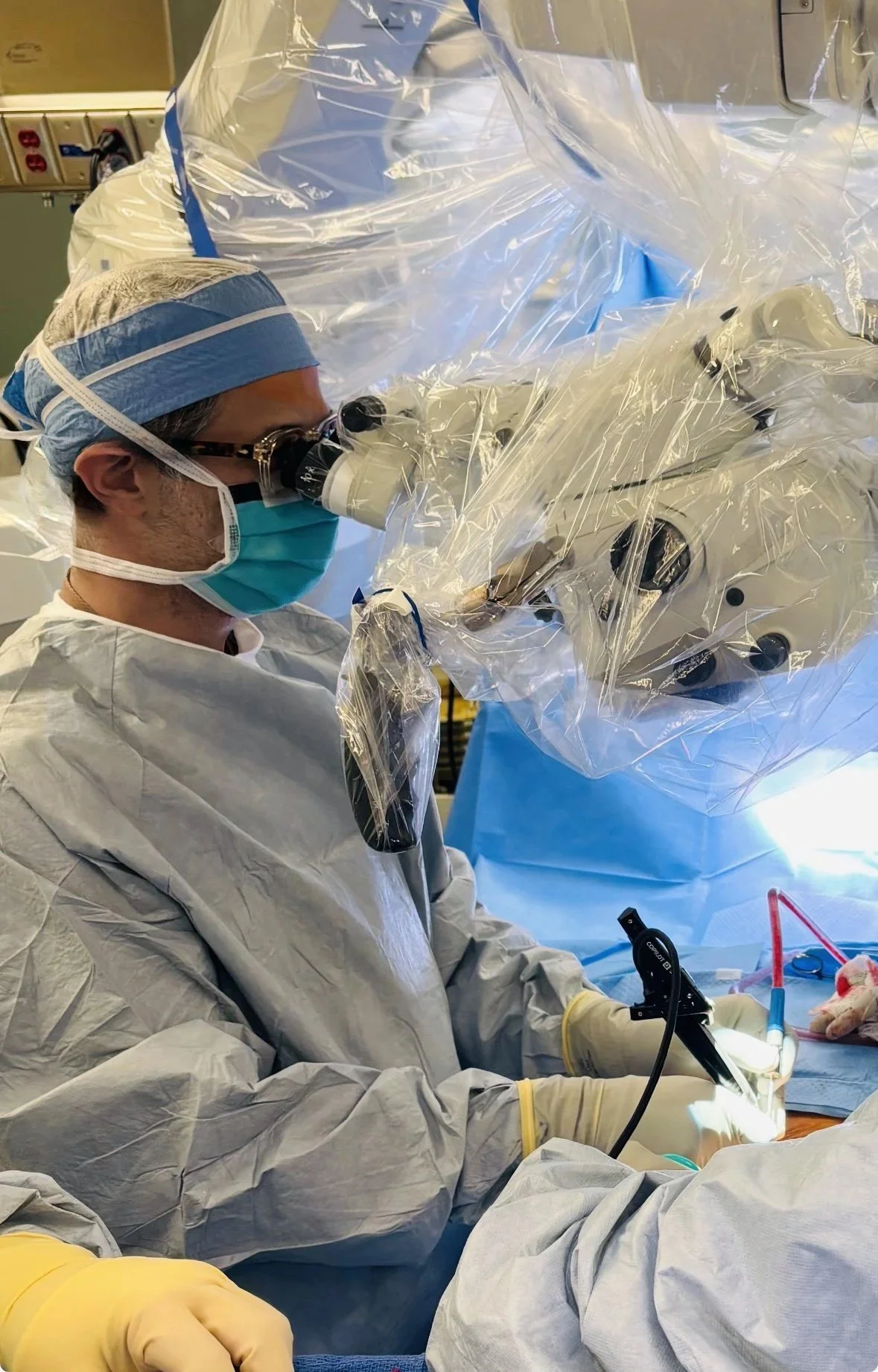
Through a narrow tube and an operating microscope, the nerves are freed while the back muscles stay intact.Tubular microdecompression
Conditions treated
- Lumbar spinal stenosis causing leg pain, heaviness, or numbness with standing and walking
- Herniated discs and sciatica
- Lateral recess and foraminal stenosis pinching a single nerve
Tubular microdecompression for spinal stenosis
In stenosis, thickened ligament, bone spurs, and enlarged joints narrow the spinal canal and squeeze the nerves. Through the tube, Dr. Ames removes the tissue that is pinching the nerves and gives them room again, while leaving the muscles and the stabilizing structures of the spine in place. Many patients with stenosis need only a decompression. A fusion is added when the spine is unstable.
Tubular microdiscectomy for a herniated disc
When a disc herniation keeps pressing on a nerve despite physical therapy, medication, and injections, or causes significant weakness, Dr. Ames removes the disc fragment that is pinching the nerve and leaves the rest of the disc in place.
Why a tube and a microscope?
A smaller incision and less muscle disruption generally mean less pain after surgery, less blood loss, and a quicker return to normal activity. Many patients go home the same day.
Common questions
How long is recovery after a microdiscectomy? Most patients go home the same day and return to desk work within one to two weeks.
Is this the same as the MILD procedure? No. MILD trims part of the thickened ligament from behind, while tubular decompression addresses everything pinching the nerves. Read Tubular Decompression vs. the MILD Procedure.
Tubular or endoscopic? Both are minimally invasive. Endoscopic surgery uses a camera through an even smaller incision and suits focused problems. Dr. Ames will tell you plainly which technique fits your diagnosis.
Schedule a consultation
Call (609) 267-9400 to see Dr. Ames at Virtua Reconstructive Orthopaedics in Sewell or Cherry Hill, NJ.
Related: Spinal Stenosis · Herniated Disc & Sciatica · Endoscopic Spine Surgery · Home